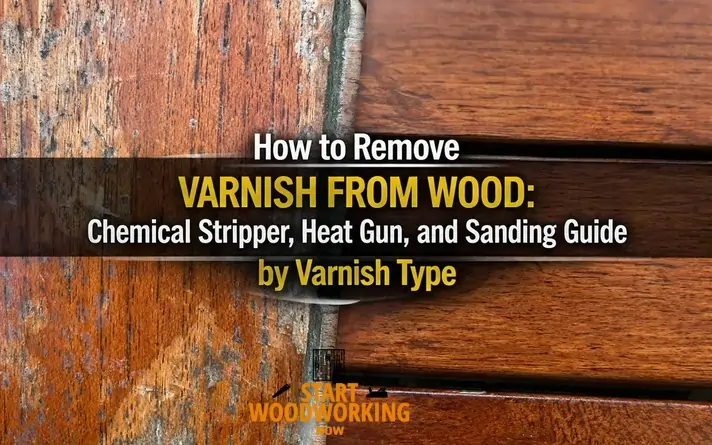
How to Remove Varnish from Wood: Chemical Stripper, Heat Gun, and Sanding Guide by Varnish Type
Removing varnish from wood requires identifying the varnish chemistry before selecting a stripper or method — because varnish is not a single product but a category that includes alkyd oil varnish, water-based acrylic varnish, spirit varnish (shellac-based), and spar marine varnish, each with different chemical resistance and solubility. Alkyd and spirit varnishes respond to solvent-based gel strippers and heat guns. Water-based acrylic varnish responds to water-based strippers and heat. Spar marine varnish — the most chemically resistant — requires strong solvent gel strippers at extended dwell times or mechanical sanding, and resists heat gun removal on its own. Applying the wrong stripper to the wrong varnish type results in incomplete removal, wasted product, and potential finish damage.
This guide covers the identification test for each varnish type, exact dwell times and temperatures per method and varnish chemistry, surface-specific instructions for furniture and floors, and the complete protocol for spar marine varnish — the most commonly mishandled removal scenario.
→ For removing polyurethane specifically: How to Remove Polyurethane from Wood
→ For a complete overview of all finish removal: How to Remove Wood Finishes and Stains
What Type of Varnish Is on Your Wood Surface?
Varnish type determines which stripper chemistry to use, what dwell time to expect, and whether the heat gun is an appropriate primary method. The four types below cover all varnish formulations in common use on wood furniture, floors, and exterior surfaces.
How Do You Identify the Varnish Type Before Starting?
The solvent test identifies varnish chemistry in under 5 minutes using materials available in any workshop. Perform this test on an inconspicuous area before purchasing any stripper or beginning work.
What Are the Key Specifications for Removing Varnish from Wood?
| Method | Attribute | Value |
|---|---|---|
| Solvent gel stripper (alkyd varnish) | Dwell time | 20–30 minutes |
| NMP water-based stripper (alkyd varnish) | Dwell time | 45–60 minutes |
| Water-based stripper (acrylic varnish) | Dwell time | 20–40 minutes |
| Denatured alcohol (spirit / shellac varnish) | Method | Direct wipe with saturated cloth — no dwell needed |
| Solvent gel stripper (spar marine varnish) | Dwell time | 45–90 minutes minimum; cover with plastic film |
| Methylene chloride stripper (spar marine varnish) | Dwell time | 15–20 minutes; fully ventilated area mandatory |
| Heat gun — water-based acrylic varnish | Surface temperature target | 150–180°C |
| Heat gun — alkyd oil varnish | Surface temperature target | 200–250°C |
| Heat gun distance from surface | Working distance | 5–8 cm; continuous sweeping motion |
| Scraper angle (all methods) | Angle to wood surface | 30–45 degrees — plastic on furniture, metal on floors |
| Sandpaper — starting grit after stripper | Grit for residue removal | 100–120 grit |
| Sandpaper — standalone removal (1–2 coats) | Starting grit | 80 grit |
| Sandpaper — final preparation | Grit before refinishing | 180–220 grit |
| Caustic stripper on mahogany / old oak | Risk | Tannin reaction — dark staining; neutralise with white vinegar (1:4) immediately after |
| Post-strip wash — solvent gel | Cleaning agent | Mineral spirits wipe; allow 30–60 min before sanding |
| Post-strip wash — water-based stripper | Drying time | 24 hours minimum before sanding or refinishing |
Which Removal Method Is Correct for Each Varnish Type and Scenario?
| Varnish Type | Best Method — Furniture | Best Method — Floors | Best Method — Profiles/Carving |
|---|---|---|---|
| Alkyd oil varnish | Solvent gel stripper (20–30 min) + plastic scraper; OR heat gun at 200–250°C + metal scraper | Water-based stripper (45–60 min) + metal floor scraper + drum sander 80–120–180 grit | Solvent gel paste stripper (20–30 min) + stiff brush + #0 steel wool for profiles |
| Water-based acrylic varnish | Water-based stripper (20–40 min) + plastic scraper; OR heat gun at 150–180°C | Water-based stripper + metal floor scraper + drum sander 100–120–180 grit | Water-based gel (20–40 min) + soft brush + #00 steel wool |
| Spirit varnish (shellac-based) | Denatured alcohol wipe — fastest; OR solvent gel (10–15 min) | Denatured alcohol mop + metal scraper (rare on floors); solvent gel if large area | Denatured alcohol with cotton swab and soft brush into profiles |
| Spar marine varnish | Strong solvent gel (45–90 min under plastic film); OR methylene chloride (15–20 min) outdoors only | Methylene chloride stripper + metal floor scraper + belt/drum sander 60–80–120 grit | Strong solvent gel paste (60–90 min) + stiff brush; may need 2–3 applications |
📝 In my restoration workshop, the solvent identification test has been the single most time-saving step I have added to my process. On pre-1950 antique furniture, I now test with denatured alcohol as the first action — and approximately 60% of pieces I see with what clients describe as “thick, dark varnish” turn out to be spirit varnish that dissolves in under three minutes of alcohol contact. The time difference between spirit varnish removal and alkyd varnish removal is several hours of work. Without the identification step, I would apply a gel stripper and wait 30 minutes for a result that denatured alcohol would achieve in three.
How Do You Remove Varnish from Wood Using a Chemical Stripper?
Chemical strippers dissolve the varnish film by breaking the polymer cross-links that bind the varnish to the wood surface. They are the correct primary method for all varnish types on carved profiles and mouldings, for spar marine varnish on any surface, and for alkyd or water-based varnish indoors where heat gun use is impractical.
The stripper type must be matched to the varnish chemistry — a water-based stripper applied to spar marine varnish will show no penetration even after 90 minutes.
STEP 1 – Select the correct stripper for your varnish type
For alkyd oil varnish: use a solvent gel stripper containing dibasic esters, NMP, or benzyl alcohol. Dwell time 20–30 minutes on single coats, up to 45 minutes on built-up thick layers. For water-based acrylic varnish: use a water-based NMP stripper — these are formulated specifically for acrylic polymer dissolution and penetrate water-based varnish faster than solvent gel.
Dwell 20–40 minutes. For spirit/shellac varnish: denatured alcohol applied with a saturated cloth dissolves the finish within 2–3 minutes — no dwell period required. For spar marine varnish: use a strong solvent gel rated for marine finishes, or methylene chloride if working outdoors with full PPE. Dwell 45–90 minutes minimum under plastic film cover.
STEP 2 – Apply with a natural-bristle brush in one direction
Apply gel or paste stripper with a natural-bristle brush in a single direction — do not brush back and forth. Build up a 3–4 mm thick even layer. On vertical surfaces such as door frames, table legs, and cabinet sides, gel or paste formulations are mandatory — liquid strippers run off vertical surfaces before the dwell time completes, reducing penetration to the point of ineffectiveness.
On flat horizontal surfaces, liquid strippers are acceptable for alkyd and water-based varnish. Cover the applied stripper with plastic film in warm conditions or when using any stripper on spar marine varnish — the plastic film maintains stripper activity for the full dwell period.
STEP 3 – Allow the full dwell time — the most common failure point
Scraping before the varnish has fully dissolved is the single most common cause of incomplete varnish removal and unnecessary repetition of the process. The varnish is ready to scrape when it visibly wrinkles, bubbles, or lifts from the wood in sheets when tested with a scraper corner at minimal pressure. If the varnish is still firmly bonded, re-cover and continue the dwell.
On spar marine varnish, the first signs of softening may not appear until 45–60 minutes — the thick flexible film resists stripper penetration significantly longer than standard varnish.
STEP 4 – Scrape along the grain at 30–45 degrees
Use a plastic scraper on furniture to avoid scratching the wood when the varnish film is removed and the tool contacts bare wood. Hold the scraper at 30–45 degrees — a lower angle reduces scratch risk but requires more passes; a higher angle removes more material per pass but increases scratch risk. Work in the grain direction in long strokes on flat panels.
For profiles, mouldings, and carved areas, replace the flat scraper with a stiff natural-bristle brush to work the softened varnish out of recessed areas, then follow with #0 steel wool (not #0000 — use coarser grade for varnish removal vs. #0000 for final polishing) with a fresh application of gel to extract the last material from carved detail.
STEP 5 – Clean the surface after stripping
For solvent gel strippers: wipe the surface with a mineral spirits-dampened cloth in the grain direction. Replace the cloth frequently. Allow 30–60 minutes before sanding. For water-based strippers: wipe with a damp cloth and clean water.
Allow a minimum of 24 hours drying time before sanding — water raises the wood grain, and sanding damp wood creates uneven material removal and a rough surface that cannot be smoothed without further sanding. For denatured alcohol on spirit varnish: the alcohol evaporates rapidly — no additional cleaning step required. Allow 10–15 minutes and inspect the surface before sanding.
Caustic strippers on mahogany, old oak, and walnut: Sodium hydroxide (NaOH) caustic strippers react with the high tannin content of these species to produce dark grey or black staining on the exposed wood grain. This is not the varnish — it is a tannin-caustic reaction in the wood itself. Neutralise immediately after stripping by wiping the surface with a diluted white vinegar solution (1 part vinegar to 4 parts water). Rinse with clean water. Allow to dry fully. The dark staining may require oxalic acid treatment if it persists. Avoid caustic strippers entirely on mahogany, old oak, chestnut, and walnut unless you are prepared for this follow-up treatment.
How Do You Remove Varnish from Wood Using a Heat Gun?
The heat gun method works by heating the varnish film above its glass transition temperature — the point at which the polymer chains become mobile and the film softens from solid to a pliable, scrapeable state.
This transition temperature differs by varnish type: water-based acrylic varnish softens at 150–180°C; alkyd oil varnish requires 200–250°C; spirit/shellac varnish is not suited to heat removal because the alcohol solvents in shellac release vapour before the film softens; spar marine varnish softens at high temperatures but often re-hardens quickly on cooling, making scraping impractical without a chemical pre-treatment.
STEP 1 – Set the heat gun to the correct temperature for the varnish type
For water-based acrylic varnish: set to 150–180°C. The film softens readily and scorches at temperatures above 200°C — keep to the lower range. For alkyd oil varnish: set to 200–250°C. This type requires more heat to reach the glass transition temperature.
Start at 200°C and increase in 20°C increments if the varnish is not softening within 15–20 seconds of heat contact. Never exceed 280°C on wood — above this temperature wood fibres begin to char, and varnish generates acrid fumes from burning polymer.
STEP 2 – Hold 5–8 cm from the surface and move continuously
Hold the heat gun 5–8 cm from the varnish surface and move in a slow, continuous sweeping motion across a 15–20 cm section. Never hold the heat gun stationary — concentrated heat scorches the varnish and the wood within seconds even at low settings.
The varnish is ready to scrape when it visibly bubbles or changes from glossy to matte with a slightly soft appearance under the heat. Scrape immediately — varnish re-hardens within 3–5 seconds of the heat source being removed. Work in small sections: heat one area, scrape completely, then move to the adjacent section.
STEP 3 – Follow with chemical stripper or sandpaper for residual film
Heat gun removal almost never removes 100% of multi-coat varnish in one pass. A thin residual layer bonds more strongly to the wood surface after repeated heating, particularly with alkyd varnish where the lower varnish coats have the longest cure time.
After heat gun removal of the bulk film, apply a solvent gel stripper at 15–20 minutes dwell to dissolve the residual layer and scrape again. Alternatively, sand from 100 grit through 120 to 180 grit to mechanically remove the remaining thin film. This combination approach is faster overall than attempting full removal by heat alone and avoids the risk of scorching from extended heat gun contact on the same area.
How Do You Remove Varnish from Wood by Sanding?
Sanding removes varnish by mechanical abrasion and is most efficient when used as a finishing step after chemical or heat pre-treatment rather than as the sole removal method for thick or built-up varnish.
Sanding thick varnish from scratch clogs sandpaper rapidly — the varnish polymer melts slightly under friction and smears across the abrasive surface, reducing cutting efficiency significantly. Chemical or heat pre-treatment reduces varnish to a thin residual film that sanding removes cleanly without excessive clogging.
| Situation | Starting Grit | Intermediate | Final Grit |
|---|---|---|---|
| Residual thin film after chemical or heat pre-treatment | 100–120 grit | 150 grit | 180–220 grit |
| Single varnish coat on solid hardwood (no pre-treatment) | 80 grit | 120 grit | 180 grit |
| Multiple built-up varnish coats (standalone sanding) | 60–80 grit | 100–120 grit | 180 grit |
| Hardwood floor after chemical stripping | 80 grit (drum sander) | 100–120 grit | 150–180 grit |
| Feathering repair area into surrounding varnished surface | 150 grit | 180 grit | 220 grit |
Use stearated (dry-lubricated) sandpaper for varnish removal — it resists clogging significantly better than standard sandpaper. Standard sandpaper clogs within 3–4 passes on medium-thick varnish and must be replaced repeatedly, increasing both cost and time. Always sand in the grain direction. Wipe with a tack cloth between grit changes to remove all dust before the next pass.
How Do You Remove Spar Marine Varnish — the Most Difficult Varnish to Strip?
Spar marine varnish is formulated specifically for maximum UV, moisture, and chemical resistance — properties that make it the hardest residential wood finish to remove. It contains alkyd resins modified with tung oil or linseed oil, plus UV absorbers and plasticisers that give it flexibility and weather resistance.
These additives also give it significant chemical resistance to standard strippers, and its flexibility means heat gun softening produces a rubbery rather than liquid state that is harder to scrape cleanly than standard varnish.
The most effective removal protocol for spar marine varnish is a combination approach: chemical pre-softening followed by mechanical scraping and sanding.
STEP 1 – Apply strong solvent gel stripper and cover with plastic film
Use a solvent gel stripper rated for marine or exterior finishes — standard furniture strippers are often insufficient.
Apply a generous 4–5 mm thick layer and cover immediately with plastic film or waxed paper to prevent evaporation. The plastic cover is critical for spar varnish — the extended dwell time required means the stripper will dry completely without it, requiring reapplication before penetration is complete.
STEP 2 – Allow 45–90 minutes — check at 45 minutes
Check at 45 minutes by pressing the corner of a plastic scraper lightly against the surface. Spar varnish softens in stages — initially the outer layers become rubbery, and deeper layers take longer to reach the same state. If the scraper meets significant resistance, re-cover and wait to the 60 or 90 minute mark.
Two applications of 45 minutes are often more effective than one application of 90 minutes — the first application softens the outer layers, and the second penetrates to the base coat where adhesion to the wood is strongest.
STEP 3 – Scrape and follow with 60–80 grit sanding
After scraping the bulk softened spar varnish, a significant residual film typically remains on most wood types — spar varnish adhesion to wood is stronger than most standard varnishes. Apply a second stripper coat to the residual for 30–45 minutes, scrape again, and then sand with 60–80 grit to reach bare wood.
Progress to 100, 120, and 180 grit for the final surface preparation. On boat or exterior furniture timber (teak, iroko, mahogany), wipe the surface with acetone after the final sanding to remove natural oils that would interfere with the adhesion of the new varnish coat.
Methylene chloride on spar marine varnish: If working outdoors with full PPE (KN95 respirator, chemical-resistant gloves, long sleeves), methylene chloride strippers dissolve spar marine varnish at 15–20 minutes dwell — significantly faster than solvent gel.
The higher vapour pressure means the plastic film cover is essential. Never use methylene chloride indoors or in semi-enclosed spaces — the fumes accumulate rapidly and reach toxic concentrations in minutes.
How Does the Wood Surface Type Affect Varnish Removal?
| Surface Type | Varnish Type | Primary Method | Key Constraint |
|---|---|---|---|
| Solid hardwood furniture | Alkyd or water-based | Solvent gel or water-based stripper + plastic scraper, then 100–180 grit | Plastic scraper mandatory — metal scratches bare wood |
| Antique furniture | Spirit/shellac varnish | Denatured alcohol wipe — fastest; solvent gel 10–15 min if alcohol insufficient | Identify shellac before applying any heat — heat blisters shellac permanently |
| Carved profiles and mouldings | Any | Gel paste stripper + stiff brush + #0 steel wool; denatured alcohol for spirit varnish | Flat scrapers and sanding cannot reach recessed carved detail |
| Wood veneer | Any | Water-based stripper + plastic scraper only — no sanding, no heat | Veneer 0.6–2 mm thick — heat delaminates adhesive; sanding cuts through |
| Hardwood floor (interior) | Alkyd or water-based | Water-based stripper + metal floor scraper + drum sander 80–120–180 grit | 24 hr drying after water-based stripper; check wear layer depth before sanding |
| Exterior wood / garden furniture | Spar marine varnish | Strong solvent gel (45–90 min under plastic film) + scraping + 60–80 grit sanding | Two stripper applications often needed; acetone wipe before refinishing oily species |
| Softwood (pine, spruce) | Any | Water-based stripper + plastic scraper — avoid heat gun on softwood | Heat gun scorches softwood resin pockets; solvent stripper safer on porous softwood |
📝 The most challenging varnish removal project I have encountered in my workshop was garden teak furniture with four coats of spar marine varnish applied over a ten-year period without stripping. Two full applications of solvent gel at 60 minutes each under plastic film were required before the base coat released cleanly from the teak. After scraping, I needed 60 grit sanding to reach bare wood, followed by an acetone wipe to remove teak’s natural oils before the new spar varnish coat would adhere correctly. The total process took two full days — significantly more than the client had anticipated based on information from general DIY sources.
Frequently Asked Questions About Removing Varnish from Wood
What is the difference between varnish and polyurethane, and does it affect removal method?
Traditional varnish is made from natural or synthetic resins (alkyd) dissolved in oil and solvent, creating a flexible film that cures by oxidation rather than by chemical cross-linking. Polyurethane is a cross-linked polymer that cures by a chemical reaction producing a harder, more chemically resistant film than standard varnish.
This difference matters for removal: standard alkyd varnish responds to solvent gel strippers at 20–30 minutes dwell, while polyurethane requires the same strippers at longer dwell times or stronger active agents. The identification test distinguishes them by hardness and solvent response — alkyd varnish is slightly softened by mineral spirits after 2 minutes; polyurethane is not.
Can you apply new varnish directly over old varnish without removing it?
You can apply new varnish over old varnish if the existing finish is in sound condition — no peeling, cracking, or delamination — and the surfaces are compatible (same varnish chemistry). Sand the existing varnish with 220 grit to create a mechanical key for the new coat, wipe with a tack cloth, and apply.
The limitation is that each successive coat without stripping builds up a thick film that eventually cracks and peels as the build exceeds the flexibility the finish can sustain. On exterior surfaces exposed to UV and temperature cycling, stripping back to bare wood and refinishing every 5–7 years produces a more durable long-term result than repeatedly coating over existing varnish.
How do you remove varnish from wood without chemical strippers or sanding?
Spirit varnish (shellac-based) can be removed entirely with denatured alcohol — no strippers or sanding required. A cloth saturated with denatured alcohol dissolves the finish in 2–3 minutes of contact; wiping removes the dissolved material cleanly.
For alkyd and water-based varnish, the heat gun at the correct temperature softens and allows scraping without chemicals or sanding, though a light sanding pass is usually needed for residual film. Spar marine varnish cannot be practically removed without either strong chemical strippers or sanding — it resists both heat gun removal and standard strippers at normal dwell times.
Why does chemical stripper leave a residual grey or dark stain on the wood after varnish removal?
Grey or dark staining after chemical stripping has two possible causes: neutralisation failure and tannin reaction. If caustic (NaOH) stripper was used on a high-tannin wood species — mahogany, old oak, walnut — the sodium hydroxide reacts with tannins in the grain to produce dark iron-tannate compounds.
Neutralise immediately with diluted white vinegar (1:4) and rinse; if staining persists, treat with oxalic acid wood bleach. If a solvent gel stripper was used and grey staining appears, this is usually dissolved varnish residue mixed with fine wood fibres — clean with mineral spirits and sand with 120 grit to resolve.
Summary: Key Values for Removing Varnish from Wood
Removing varnish from wood begins with identifying the varnish type using the solvent test: denatured alcohol dissolves spirit/shellac varnish in 30 seconds; rubbing alcohol softens water-based acrylic varnish in 60 seconds; mineral spirits partially softens alkyd varnish in 2 minutes; spar marine varnish resists all three solvents.
Spirit varnish is removed fastest by denatured alcohol wipe — no stripper dwell required. Water-based acrylic varnish responds to water-based NMP stripper at 20–40 minutes dwell or heat gun at 150–180°C.
Alkyd oil varnish requires solvent gel stripper at 20–30 minutes dwell or heat gun at 200–250°C. Spar marine varnish requires strong solvent gel at 45–90 minutes under plastic film — two applications are often needed — followed by 60–80 grit sanding to reach bare wood.
Avoid caustic strippers on mahogany, old oak, walnut, and chestnut — tannin reaction produces dark staining requiring oxalic acid treatment. Use stearated sandpaper for all varnish removal sanding to reduce clogging.
→ Related: How to Remove Polyurethane from Wood
→ Related: How to Remove Paint from Wood
→ Hub: How to Remove Wood Finishes and Stains — Complete Guide