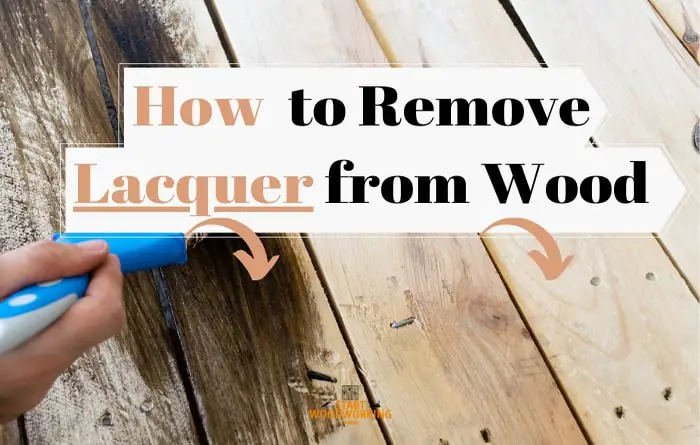
How to Remove Lacquer from Wood: Lacquer Thinner, Chemical Stripper, and Sanding Guide by Lacquer Type
Removing lacquer from wood is faster and cleaner than removing most other wood finishes because lacquer — unlike polyurethane or conversion varnish — remains solvent-soluble even after full cure. Lacquer thinner dissolves nitrocellulose and CAB-acrylic lacquer in 2–5 minutes of contact, producing no mechanical work and no sanding before the finish lifts. Water-based acrylic lacquer requires a water-based stripper or acetone rather than lacquer thinner.
Catalyzed and conversion lacquers are cross-linked like polyurethane and resist lacquer thinner — they require strong solvent gel strippers at extended dwell times or mechanical sanding. Applying lacquer thinner to polyurethane or varnish produces no result; applying it to nitrocellulose lacquer dissolves the finish in minutes.
This guide covers the identification test for each lacquer type, the correct solvent and dwell time, the re-amalgamation option for repairing lacquer without full stripping, and the complete removal protocol for each lacquer chemistry.
This guide focuses specifically on lacquer finishes. If you are unsure whether the surface is lacquer, varnish, polyurethane, or paint, start with the complete identification and removal hub:
→ How to Remove Wood Finishes (Complete Guide)
What Is the Fastest Way to Remove Lacquer from Wood?
Apply lacquer thinner to a cloth and rub a small inconspicuous area for 30–60 seconds. If the finish dissolves or becomes tacky immediately, it is nitrocellulose or CAB-acrylic lacquer — lacquer thinner removes it completely in 2–5 minutes of contact. If lacquer thinner has no effect, the finish is water-based acrylic or catalyzed lacquer and requires a different stripper.
What Type of Lacquer Is on the Wood Surface?
The lacquer type determines the correct solvent and dwell time. The identification test below takes under 3 minutes using lacquer thinner and acetone on an inconspicuous area.
Why Lacquer Removal Methods Fail (Wrong Finish Identification)?
Most failed lacquer removal attempts occur because the finish is misidentified. Each lacquer type — and each non-lacquer finish mistaken for lacquer — responds to a completely different removal mechanism. Applying the wrong solvent produces no effect or damages the surface.
Why Lacquer Removal Fails
No Effect: Poly is a cross-linked plastic; lacquer thinner lacks the molecular strength to break its bonds. Waste of solvent.
Destroyed Finish: Acetone turns shellac into a gummy, unmanageable sludge that binds to wood fibers. Use Alcohol only.
Slow + Ineffective: Gentle strippers require 60+ minutes to “swell” a finish that thinner could dissolve in seconds.
Clogged Abrasives: Friction heat melts the lacquer into the sandpaper grit instantly. Ruins paper in 5 seconds.
→ For removing varnish (alkyd, spirit, spar): How to Remove Varnish from Wood → For removing polyurethane: How to Remove Polyurethane from Wood → Hub: How to Remove Wood Finishes and Stains
How Do You Identify the Lacquer Type with a Solvent Test?
Work through this test in sequence on an inconspicuous area — the underside of a shelf, inside a drawer, or the back of a panel. Use a cotton swab or small cloth section for each test.
| Test step | Solvent | Contact time | Result and conclusion |
|---|---|---|---|
| Step 1 | Lacquer thinner | 30–90 seconds | Surface dissolves or becomes very tacky → Nitrocellulose or CAB-acrylic lacquer. Proceed with lacquer thinner method. |
| Step 2 (if Step 1 showed no effect) | Acetone | 2–3 minutes | Surface softens or partially dissolves → Water-based acrylic lacquer or CAB-acrylic. Use NMP water-based stripper or acetone method. |
| Step 3 (if Steps 1 and 2 showed no effect) | Acetone — extended | 5 minutes | Still completely unaffected → Catalyzed or conversion lacquer. Requires strong solvent gel stripper (45–60 min) or sanding. No solvent-only removal possible. |
Should You Strip the Lacquer or Re-Amalgamate It?
Nitrocellulose lacquer has a property unique among wood finishes: it remains permanently solvent-soluble even when fully cured. This means a fresh application of lacquer thinner re-dissolves the surface of an existing lacquer finish and allows the molecules to re-flow and re-fuse — eliminating crazing, white haze, drip marks, brush marks, and minor damage without stripping the finish down to bare wood.
Re-amalgamation — repair lacquer without full stripping
When to use it: Small areas of white haze (from moisture), drip marks, crazing, surface bloom, or minor scratches on nitrocellulose or CAB-acrylic lacquer. The finish must still be largely intact — re-amalgamation cannot repair a finish that has chipped, peeled, or lost adhesion.
How to do it: Apply lacquer thinner to a clean lint-free cloth and wipe over the damaged area in a single, even pass in the grain direction. The solvent re-dissolves the surface layer — do not rub back and forth, as this redistributes the dissolved lacquer unevenly. Allow to dry completely (15–30 minutes at room temperature) and inspect. The re-fused surface should show no marks or haze. For larger areas, a lacquer thinner spray applied in a light uniform mist allows even re-amalgamation without cloth marks.
Limitation: Re-amalgamation does not work on water-based acrylic lacquer or catalyzed lacquer — these do not re-dissolve in lacquer thinner. Always confirm with the identification test before attempting.
What Are the Key Specifications for Removing Lacquer from Wood?
| Method / Entity | Attribute | Value |
|---|---|---|
| Lacquer thinner (nitrocellulose / CAB) | Dwell time on single lacquer coat | 2–5 minutes; wrinkles and lifts visibly |
| Lacquer thinner (nitrocellulose / CAB) | Dwell time on multiple coats (3+) | 5–10 minutes; may need 2 applications |
| Lacquer thinner — application | Method | Brush in one direction; cover with plastic film in warm conditions |
| Water-based NMP stripper (water-based acrylic lacquer) | Dwell time | 20–40 minutes under plastic film cover |
| Acetone (CAB-acrylic, water-based) | Dwell time | 5–15 minutes; less effective than lacquer thinner on nitrocellulose |
| Strong solvent gel (catalyzed lacquer) | Dwell time | 45–60 minutes under plastic film; may need 2 applications |
| Scraper angle (all chemical methods) | Angle to surface | 20–30 degrees; plastic scraper on furniture; metal on bare wood |
| Heat gun (nitrocellulose / CAB) | Temperature | 150–200°C; continuous motion — lacquer fumes toxic at high temp |
| Heat gun (catalyzed lacquer) | Effectiveness | Limited — use only as pre-treatment before scraper; chemical stripper more effective |
| Sandpaper — after chemical stripping | Starting grit | 100–120 grit for residue; 80 grit for thick residual layers |
| Sandpaper — standalone lacquer removal | Starting grit | 80 grit for heavy build; 120 grit for single/double coats |
| Post-strip surface wash | Agent | Clean lacquer thinner wipe; allow 30 min before sanding |
| Tannin reaction risk (alkaline strippers) | Affected species | Oak, mahogany, walnut, chestnut — neutralise with white vinegar (1:4) immediately after |
| Re-amalgamation suitability | Compatible lacquer types | Nitrocellulose and CAB-acrylic only; NOT water-based or catalyzed |
How Do You Remove Nitrocellulose or CAB-Acrylic Lacquer Using Lacquer Thinner?
Lacquer thinner is the fastest and most complete solvent for nitrocellulose and CAB-acrylic lacquer because it is specifically formulated to dissolve these lacquer chemistries — it contains a blend of ketones, esters, and aromatic solvents chosen to dissolve nitrocellulose resin. A single application at the correct dwell time dissolves the lacquer film completely, leaving the bare wood beneath undamaged and ready for a new finish without any intermediate scrubbing or steel wool.
Lacquer thinner does not work on polyurethane, oil-based varnish, water-based finishes, or catalyzed lacquer — if the solvent test showed no effect, do not attempt this method.
STEP 1 – Apply lacquer thinner with a natural-bristle brush in one direction
Apply lacquer thinner generously with a natural-bristle brush in a single direction — do not brush back and forth. Build up a saturating layer that keeps the surface wet throughout the dwell time. On vertical surfaces, apply rapidly and cover with plastic film immediately to prevent the solvent from running before it penetrates. Work in sections of 0.3–0.5 m² maximum — lacquer thinner evaporates faster than most strippers, especially in warm conditions, and unsupported areas may dry before the lacquer has fully dissolved.
STEP 2 – Cover with plastic film in warm conditions
In conditions above 20°C or with any air movement, cover the applied lacquer thinner immediately with plastic film. Lacquer thinner has a high vapour pressure and evaporates rapidly — coverage extends the effective dwell time significantly and allows the solvent to penetrate multiple lacquer coats rather than lifting only the surface layer. Remove the film just before scraping.
STEP 3 – Allow 2–10 minutes dwell — scrape when lacquer wrinkles and lifts
The lacquer is ready to scrape when the surface visibly wrinkles, bubbles, or lifts from the wood — test by pressing the corner of a plastic scraper lightly against the surface. On single coats of nitrocellulose, this typically takes 2–5 minutes.
On 3+ coats or heavy build, 5–10 minutes and possibly a second application are needed. Never scrape before the lacquer has fully dissolved — premature scraping leaves a hard residual layer that becomes increasingly difficult to dissolve with subsequent applications.
STEP 4 – Scrape along the grain at 20–30 degrees
Use a plastic scraper at 20–30 degrees on finished furniture to avoid scratching the wood when the scraper contacts bare wood below the dissolved lacquer. The dissolved lacquer comes away as a liquid or semi-liquid film — collect it immediately and deposit in a container.
For profiles, mouldings, and carved areas, use a stiff natural-bristle brush to work the dissolved lacquer out of recessed areas, then wipe with a lacquer-thinner-dampened cloth.
STEP 5 – Wipe with clean lacquer thinner and allow to dry
After scraping, wipe the surface with a clean cloth dampened with fresh lacquer thinner to remove all dissolved lacquer residue. Replace the cloth frequently — a cloth saturated with dissolved lacquer re-deposits material rather than cleaning. Allow 30 minutes minimum drying time before sanding. Lacquer thinner leaves no chemical residue requiring neutralisation — unlike water-based strippers, no water wash is needed before the surface is ready for refinishing.
Dissolves the nitrocellulose resin instantly. The lacquer literally becomes the solvent, liquefying 10+ coats in seconds.
Works by swelling the polymer until it detaches (delamination). High labor/scraping effort required to lift dried film.
📝In my restoration workshop, the solvent identification test for lacquer has saved significant time on multiple occasions. The most instructive case was a 1960s Romanian walnut sideboard with what appeared to be a dark, damaged finish — a single pass with a lacquer-thinner-dampened cloth on the underside confirmed nitrocellulose lacquer immediately. The entire finish was dissolved and scraped in two lacquer thinner applications taking approximately 25 minutes total, compared to the 90-minute process a solvent gel stripper would have required. On the same piece, two areas of white haze near the top were resolved by re-amalgamation alone without any stripping — a single cloth wipe with lacquer thinner re-fused the finish surface completely.
How Do You Remove Water-Based Acrylic Lacquer Using Chemical Stripper?
Water-based acrylic lacquer does not respond to lacquer thinner and requires either a water-based NMP stripper (the most effective option) or acetone at longer contact times. The water-based stripper penetrates the acrylic polymer by swelling it — the same mechanism used for water-based polyurethane removal.
Apply NMP water-based stripper generously, cover with plastic film, and allow 20–40 minutes dwell time. The finish is ready to scrape when it shows visible wrinkling or lifting at the test point. On modern factory furniture with water-based lacquer applied by spray over a large surface area, a single 30-minute NMP application typically removes the finish completely in one pass.
After scraping, wipe with a damp cloth and allow 24 hours drying before sanding or refinishing — the water wash raises the wood grain, which must be fully dry before sanding to prevent uneven material removal.
How Do You Remove Catalyzed or Conversion Lacquer?
Catalyzed lacquer is a two-component system — a lacquer base mixed with an acid catalyst before application. The acid catalyst causes the lacquer to cross-link into a thermoset polymer similar to polyurethane, making it chemically resistant to standard lacquer thinner and acetone. Removal requires either a strong solvent gel stripper at extended dwell times or mechanical sanding — there is no fast solvent method.
Apply a strong solvent gel stripper (methylene chloride-based or NMP-based high-strength) at 4–5 mm thickness and cover with plastic film. Allow 45–60 minutes minimum dwell — catalyzed lacquer resists initial penetration.
Check at 45 minutes: if the surface shows wrinkling and lifts with light scraper pressure, it is ready. If the finish is still firmly bonded, extend the dwell to 60–75 minutes or apply a second coat after the first is scraped. Two applications of 45 minutes are often more effective than one 90-minute application because the first softens the outer layers, allowing the second to reach the base coat adhesion zone.
Alkaline strippers on tannin-rich species: Sodium hydroxide (NaOH) caustic strippers dissolve catalyzed lacquer effectively but cause severe grey-black tannin staining on oak, mahogany, walnut, and chestnut. Neutralise immediately after stripping with diluted white vinegar (1 part to 4 parts water). Rinse. If grey staining persists, apply oxalic acid at 60 g per litre for 15–20 minutes. Avoid caustic strippers entirely on these species when the natural wood tone must be preserved — use a solvent gel stripper instead.
How Do You Remove Nitrocellulose Lacquer Using a Heat Gun?
The heat gun method is effective on nitrocellulose and CAB-acrylic lacquer at 150–200°C and is faster than chemical stripping on large flat surfaces where lacquer thinner evaporates before the operator can cover the full area. It produces no chemical waste and requires no cleanup beyond dust removal. It is not recommended as a primary method for catalyzed lacquer — the heat softens it slightly but the finish does not flow and scrape as cleanly as with solvent treatment.
Hold the heat gun at 5–8 cm from the surface and move continuously in sweeping passes — never stationary. The nitrocellulose lacquer softens at 150–180°C and can be scraped immediately as it becomes soft and pliable.
Scrape with a metal scraper on bare wood or a rigid plastic scraper on furniture at 30–45 degrees — a slightly steeper angle than for chemical methods because the softened lacquer needs more mechanical persuasion to detach. Move heat and scraper together across the surface in coordinated passes.
Lacquer fumes under heat are more toxic than chemical stripper fumes: Nitrocellulose lacquer heated to its softening temperature releases nitrocellulose decomposition products that are significantly more harmful than lacquer thinner vapour. Work outdoors or in a space with active air extraction — not just open windows — when using a heat gun on lacquer. A properly fitted respirator with organic vapour cartridges is mandatory. This is a more serious respiratory hazard than chemical stripping and is often understated in DIY guides.
How Does the Wood Surface Type Affect Lacquer Removal?
| Surface Type | Nitrocellulose / CAB | Water-Based Acrylic | Catalyzed Lacquer |
|---|---|---|---|
| Solid hardwood furniture | Lacquer thinner 2–5 min + plastic scraper; or heat gun at 150–200°C | NMP stripper 20–40 min; acetone 10–15 min as alternative | Strong solvent gel 45–60 min under plastic film; 2 applications often needed |
| Veneer furniture | Lacquer thinner (no sanding); plastic scraper at flattest angle; watch for adhesive lines | NMP stripper (water content minimal) or acetone; no sanding | Solvent gel carefully — avoid long water-content dwell that risks delamination |
| Carved profiles and mouldings | Lacquer thinner + stiff bristle brush into recesses; cotton swab for fine detail | NMP gel + stiff brush; acetone on cotton swab for detail | Solvent gel paste + stiff brush; extended dwell; may need 3+ applications in deep profiles |
| Hardwood floors | Lacquer thinner is rare on floors; typically acetone or NMP stripper + floor scraper + drum sander | NMP stripper + metal floor scraper + drum sander 80–120–180 grit | Strong stripper + drum sander; 24h drying before sanding after water-based products |
| Softwood (pine, spruce) | Lacquer thinner careful — softwood is more porous; test absorption depth first | NMP stripper — avoid alkaline strippers on softwood near knots | Solvent gel; avoid caustic/alkaline strippers on softwood |
| Musical instruments | Almost always nitrocellulose; lacquer thinner is standard; re-amalgamation preferred for repairs | Rare — acetone if confirmed water-based | Extremely rare on instruments; solvent gel if encountered |
📝 The most challenging lacquer removal I have encountered was on modern kitchen cabinet doors from a 2015 renovation — the catalyzed lacquer finish was completely unaffected by lacquer thinner and showed only minimal softening after 5 minutes of acetone contact. Two applications of a strong solvent gel at 50 minutes each were required before the finish began to lift consistently. On the oak-frame sections of the cabinet, I neutralised with diluted vinegar immediately after stripping to prevent tannin staining — the same protocol I use for ash stain neutralisation. The total stripping time was approximately 3.5 hours for 12 door panels, which aligned with what the catalyzed lacquer’s chemical resistance would predict.
Frequently Asked Questions About Removing Lacquer from Wood
What is the difference between lacquer thinner and paint thinner for removing lacquer?
Lacquer thinner is a blend of ketones (acetone, MEK), esters (ethyl acetate, butyl acetate), and aromatic solvents specifically formulated to dissolve nitrocellulose and CAB-acrylic lacquer resins. Paint thinner (mineral spirits) is a petroleum distillate designed to thin oil-based paints and varnishes — it has no solvent action on lacquer resins. Applying paint thinner to nitrocellulose lacquer produces no significant softening or dissolution. Lacquer thinner is the correct solvent for lacquer removal; paint thinner works on oil-based paint and varnish residue cleaning but not on lacquer itself.
Can you apply new lacquer directly over old lacquer without stripping?
Yes — for nitrocellulose and CAB-acrylic lacquer. A new coat of lacquer applied over an existing nitrocellulose lacquer finish re-amalgamates (re-dissolves and bonds) with the previous coats, creating a chemically unified film rather than separate layers. This is one of lacquer’s key advantages as a finish — it is infinitely renewable without stripping by simply applying additional coats. The limitation is film thickness: each additional coat without stripping builds up the total film, which eventually cracks and peels when the build exceeds the finish’s ability to flex. Typically, 8–12 coats represents a practical maximum before stripping and starting fresh is advisable. Water-based acrylic lacquer and catalyzed lacquer do not re-amalgamate — new coats bond mechanically rather than chemically and require a scuff sand between coats.
How do you know when all the lacquer has been removed?
The wood surface should appear uniformly matte with no shiny spots when inspected in raking light — hold a lamp close to the surface at a low angle and look across the surface. Shiny areas indicate lacquer film still present. A more precise confirmation: apply a small amount of lacquer thinner to a white cloth and rub the sanded surface — if any dissolved lacquer transfers to the cloth as a slight yellowing or haze, residual lacquer is present. A completely clean white cloth with no transfer after a firm wipe confirms bare wood. On oiled or waxed wood, this test shows some colour from natural wood oils — this is normal.
Is lacquer thinner safe to use on antique furniture finishes?
Lacquer thinner is safe to use for removing nitrocellulose lacquer on antique furniture — and it is in fact the correct solvent for this purpose, as most antique furniture finished before the 1970s uses nitrocellulose lacquer. However, lacquer thinner dissolves shellac equally rapidly and dissolves some spirit varnishes. Always perform the identification test on an inconspicuous area: if the finish dissolves within 30–60 seconds of lacquer thinner contact, it is nitrocellulose lacquer or shellac. Apply denatured alcohol next — if that dissolves it equally fast, it is shellac (not lacquer), and lacquer thinner is appropriate for removal but aggressive. For shellac-finished antiques, denatured alcohol alone is the preferred solvent — it dissolves shellac without the additional solvency power of lacquer thinner’s ketone-ester blend.
Summary: Key Values for Removing Lacquer from Wood
Removing lacquer from wood begins with identifying the lacquer type using the solvent test: lacquer thinner dissolving the surface within 30–90 seconds confirms nitrocellulose or CAB-acrylic lacquer — the fastest removal scenario using lacquer thinner at 2–10 minutes dwell time.
If lacquer thinner has no effect but acetone softens the surface, the lacquer is water-based acrylic, requiring NMP stripper at 20–40 minutes dwell. If both lacquer thinner and acetone are ineffective, the finish is catalyzed or conversion lacquer, requiring strong solvent gel at 45–60 minutes under plastic film with possibly two applications.
Before full stripping, assess whether re-amalgamation — applying fresh lacquer thinner to re-fuse the existing finish surface — can repair the damage without removal: this is only possible on nitrocellulose and CAB-acrylic lacquer and is the preferred approach for white haze, crazing, and minor surface damage on otherwise intact lacquer finishes. Avoid alkaline (NaOH) strippers on oak, mahogany, walnut, and chestnut — they cause tannin staining requiring oxalic acid treatment after.
→ Related: How to Remove Varnish from Wood → Related: How to Remove Polyurethane from Wood → Hub: How to Remove Wood Finishes and Stains — Complete Guide