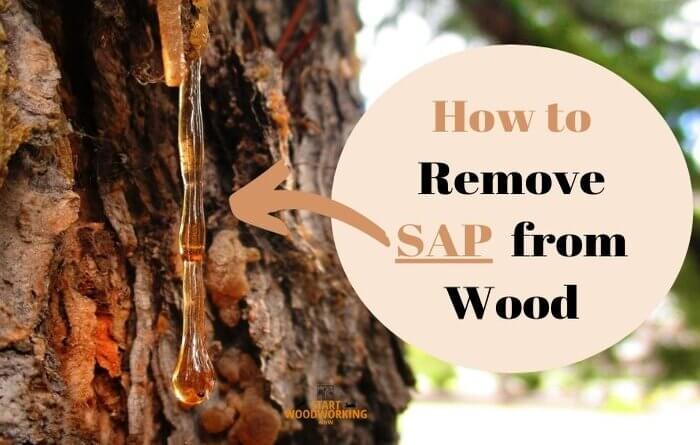
How to Remove Sap from Wood: Turpentine, Alcohol, and Acetone Guide by Sap State
Tree sap and wood resin are composed primarily of terpene resins — α-pinene, β-pinene, and related compounds — dissolved in volatile essential oils. As sap ages on a wood surface, the volatile carrier oils evaporate and the terpene resin polymerises progressively from sticky liquid to firm gum to hard, brittle solid.
The correct solvent changes as the sap polymerises: fresh liquid sap is dissolved by turpentine or mineral spirits; partially cured rubbery sap requires isopropyl alcohol at 90–99%; fully polymerised hard sap needs acetone or lacquer thinner. Applying dish soap or water to pine resin produces no result — terpene resins are non-polar compounds insoluble in water and in aqueous cleaning products.
How Do You Remove Sap from Wood?
This guide covers the sap state identification test, the correct solvent and technique for each polymerisation stage, and the knot sealer protocol for wood that bleeds sap from within — which is a separate problem from dripped sap and requires a different solution.
→ Related: How to Remove Grease from Wood (mineral spirits protocol)
→ For a complete overview of all wood stain and finish removal: How to Remove Wood Finishes and Stains
Which Sap Removal Scenario Do You Have?
The approach differs significantly between sap that has dripped onto a wood surface from outside and sap that is bleeding from within the wood itself through knots or resin pockets.
How Does the Sap Polymerisation State Determine the Removal Method?
Terpene resin polymerises continuously after the sap is exposed to air. The three states below correspond to different solvent requirements — identify which state the sap is in before selecting any product.
What Are the Key Specifications for Removing Sap from Wood?
| Solvent / Method | Attribute | Value |
|---|---|---|
| Turpentine (fresh sap) | Contact time | 1–3 minutes; wipe with cloth in grain direction |
| Mineral spirits (fresh sap) | Contact time | 2–5 minutes; effective on fresh and light semi-cured |
| Isopropyl alcohol 90–99% (semi-cured) | Contact time | 3–5 minutes; mechanical scraping may be needed first |
| Acetone (polymerised / hard sap) | Contact time | 2–5 minutes; cover with soaked cloth to prevent evaporation |
| Acetone on polyurethane finish | Safe contact limit | 30 seconds maximum per application — repeat rather than extend |
| Acetone on lacquer or shellac | Safe use | NOT safe — dissolves both finishes immediately |
| Plastic scraper | Angle for bulk hard sap removal | 10–20 degrees — nearly flat; avoid gouging finish |
| Cold method (hard sap) | Pre-treatment | Ice pack in sealed bag 3–5 minutes — makes sap more brittle for easier chipping |
| Heat gun (sap bleeding from knots) | Temperature | 150–200°C; draws out residual sap for wiping; 5–8 cm distance, continuous motion |
| Knot sealer / shellac primer | Application after sap removal | 2 coats of shellac-based sealer (Zinsser BIN or equivalent); allow 30 min between coats |
| Post-treatment surface preparation | Sandpaper grit | 120–180 grit after sap removal and solvent evaporation |
| Sap removal before finishing | Timing | Remove all sap and apply knot sealer minimum 24 hours before applying any finish coat |
Why Do Dish Soap, Vegetable Oil, and Water Fail on Sap?
Terpene resins — the primary chemical component of pine, spruce, and fir sap — are non-polar organic compounds. Non-polar substances dissolve in non-polar solvents and do not dissolve in polar solvents. Water (highly polar) and aqueous cleaning products (surfactants in water) are polar — they cannot dissolve non-polar terpene resins.
Dish soap works by emulsifying polar grease compounds (cooking oil, food residue) in water using surfactant molecules. Terpene resin does not emulsify in water with dish soap — the soap has no mechanism to interact with the polymerised resin polymer chain. This is why cleaning a pine sap spot with dish soap and water produces no visible improvement.
Vegetable oil is a triglyceride — a non-polar compound that can partially dissolve fresh terpene resin through like-dissolves-like chemistry. However, vegetable oil has a very low solvency for polymerised resin and leaves an oily residue that interferes with subsequent finishing. WD-40 works on sap more effectively than vegetable oil because it contains light petroleum distillates with much higher solvency for terpenes.
The correct solvents are turpentine (itself a terpene distillate — directly related chemistry), mineral spirits (petroleum distillates), isopropyl alcohol (partially non-polar at high concentration), and acetone (ketone solvent that dissolves a wide range of organic polymers including polymerised terpenes). These all share the non-polar solvency needed to dissolve or swell the resin polymer.
How Do You Remove Dripped Sap from a Finished Wood Surface?
The method follows two stages for any sap state: mechanical bulk removal of the raised deposit, followed by solvent treatment for the thin residual film bonded to the finish surface. This approach minimises finish contact time with the solvent.
STEP 1 – Chill hard or semi-cured sap with ice to make chipping easier
For State 2 and State 3 sap, place a sealed ice bag (ice cubes in a plastic bag) on the sap deposit for 3–5 minutes. Cold makes the terpene polymer more brittle, which allows the bulk of the deposit to be chipped away with a plastic scraper at a 10–20 degree angle before any solvent is applied.
This is the same freeze-and-scrape principle used for candle wax — cold brittles the polymer and allows clean mechanical removal with minimal scraper force. State 1 (fresh liquid) sap does not benefit from chilling — proceed directly to solvent.
STEP 2 – Apply the correct solvent — matched to sap state and finish type
After mechanical removal, a thin residual film of sap remains on the finish surface. Apply the correct solvent based on the sap state identified above:
State 1 (fresh) — turpentine or mineral spirits: Apply to a cotton cloth and press onto the residual sap for 1–3 minutes. The sap should dissolve readily. Wipe in the grain direction and replace the cloth as it picks up dissolved resin. Safe on polyurethane, lacquer, and varnish at these contact times. On shellac and wax finishes, use mineral spirits only — turpentine can slightly soften shellac at extended contact.
State 2 (semi-cured) — isopropyl alcohol 90–99%: Apply to a cotton cloth and press onto the residual sap for 3–5 minutes. On polyurethane or varnish, limit to 60-second applications and repeat rather than extending contact time. On shellac, use mineral spirits instead — isopropyl dissolves shellac at extended contact.
State 3 (polymerised / hard) — acetone: Apply acetone to a cotton cloth and press onto the sap deposit. Cover the cloth with plastic film if possible to slow evaporation and maintain contact. Allow 2–5 minutes — the hard sap will soften and can be scraped then wiped away. On polyurethane or alkyd varnish: 30-second maximum contact per application — repeat 3–6 times rather than leaving acetone on the finish longer. On lacquer or shellac: acetone dissolves these finishes immediately — use mineral spirits instead and accept that removal will be partial, requiring sanding after.
STEP 3 – Clean the surface and restore the finish
After sap removal, wipe the surface with a clean cloth to remove solvent residue. On wax finishes, re-apply paste wax to the treated area — all solvents remove the wax layer. On polyurethane, acetone treatment may cause slight dulling after multiple applications — apply paste wax and buff to restore uniform sheen.
Turpentine is the most effective first-choice solvent for fresh pine sap — not because it is the strongest solvent, but because turpentine is itself derived from the distillation of pine resin and shares the same terpene chemistry. This like-dissolves-like relationship means turpentine penetrates and dissolves fresh pine, spruce, and fir sap faster than mineral spirits or isopropyl at equivalent contact times. For other species or unknown sap sources, mineral spirits is the safer first choice on finished surfaces.
📝 In my workshop, the most common sap scenario is pine or spruce lumber used for rustic furniture where clients want a natural finish — and where insufficient kiln drying means the knots continue to bleed resin for months after the piece is built. My standard protocol before finishing any softwood piece is to heat gun every knot and visible resin pocket, wipe out the mobilised resin, and apply two coats of Zinsser BIN shellac sealer over all knots before any topcoat. Pieces built without this step inevitably come back with yellowing or orange staining through the finish within the first warm summer — particularly on pieces near south-facing windows.
How Do You Stop Sap Bleeding from Knots and Resin Pockets in Wood?
Sap bleeding from within the wood — through knots, resin ducts, or resin pockets in softwood species — is not a surface contamination problem. It is a wood condition problem caused by residual resin in the wood structure being mobilised by heat, or by insufficient kiln drying of the timber before use. Surface cleaning removes the current bleed but does not address the resin source — the sap will re-appear through any finish coat applied over an unsealed knot.
The correct two-stage treatment is: extract and remove as much resin as possible, then seal the source permanently with a shellac-based knot sealer before finishing.
STEP 1 – Draw out residual sap with heat
Direct a heat gun at 150–200°C at the bleeding knot or resin pocket area, moving continuously at 5–8 cm distance. The heat re-liquefies the resin still inside the wood structure and draws it to the surface where it can be wiped away with a cloth.
Continue applying heat and wiping until no more resin appears on the cloth. On large resin pockets, this may take 3–4 heating cycles. Allow the wood to cool fully before proceeding to solvent cleaning.
STEP 2 – Clean residual resin with turpentine or isopropyl alcohol
After heat extraction, wipe the knot area thoroughly with a cloth dampened in turpentine or isopropyl 90% to remove the thin resin film remaining on the wood surface. Work into the grain around the knot where thin resin has spread. Allow to evaporate fully — minimum 1 hour at room temperature before the next step.
STEP 3 – Apply shellac-based knot sealer — 2 coats
Apply two coats of shellac-based primer/sealer (Zinsser BIN White Shellac Primer or equivalent dewaxed shellac) over the cleaned knot and a 3–4 cm margin around it. Allow 30 minutes between coats.
Shellac bonds to both bare wood and resin residue, and creates a barrier that prevents residual resin from bleeding through subsequent finish coats. This is the only reliable long-term solution for sap bleeding — water-based primers and standard paint primers do not block resin bleed and the sap will eventually push through.
STEP 4 – Sand lightly and apply finish as normal
After the shellac sealer has cured (minimum 24 hours), sand lightly with 180–220 grit to level any raised grain and provide mechanical adhesion for the topcoat. The shellac sealer is compatible with oil-based and water-based topcoats, latex paint, and all standard wood finishes. Apply the finish coat as normal — the sealed knot will no longer bleed resin through the finish.
Water-based primers do not block sap bleed: Standard water-based primers and water-based sealers do not effectively seal terpene resin. Resin is non-polar and water-based coatings have poor adhesion to resin-contaminated surfaces. If a water-based primer is applied over an unsealed knot, the resin will migrate through the water-based coating over time — typically within days to weeks in warm conditions — causing yellowing or orange staining through the topcoat. Shellac-based sealer is the only reliably effective resin blocker for wood finishing.
How Does the Wood Surface Type Affect Sap Removal?
| Surface Type | Sap State Typical | Removal Method | Key Constraint |
|---|---|---|---|
| Polyurethane finish (outdoor furniture, decking) | State 2–3 (sun accelerates polymerisation) | Chill + chip; acetone max 30 sec per application; restore with paste wax | Acetone contact limit critical; multiple short applications |
| Varnished wood (exterior) | State 2–3 | Chill + chip; acetone at 30 sec max; mineral spirits for residue on shellac-based varnish | Test finish type first — shellac/spirit varnish dissolves in acetone |
| Oiled wood (teak, decking) | State 1–3 | Turpentine (fresh) or isopropyl (cured); re-apply matching oil after | Teak’s natural oils partially resist sap adhesion — easier removal than bare wood |
| Bare / unfinished wood (construction timber, decking) | Any | Mechanical chip + turpentine/isopropyl/acetone per state; no finish to protect | On softwood (pine, spruce, fir): seal knots with shellac after removal if finishing |
| Wax finish (furniture) | State 1–2 usually (indoor, lower temp) | Mineral spirits or turpentine; re-apply paste wax after | All solvents remove wax layer — always re-wax after treatment |
| Hardwood floor (sealed) | State 2–3 (from pine furniture or boards above) | Chill + chip; acetone at 30 sec per application; floor-appropriate polish after | Never use acetone on shellac-finished antique floors |
| Wood in active construction / pre-finish | Any — from freshly cut lumber | Turpentine or mineral spirits; heat gun for knot extraction; shellac sealer before finishing | Address all sap bleed before priming or finishing — cannot fix after finish is applied |
Which Wood Species Are Most Prone to Sap Problems and Why?
| Species | Sap Type | Bleed Risk | Notes |
|---|---|---|---|
| Pine (all species) | α-pinene / β-pinene resin — highly aromatic | High | Most common sap problem in construction and outdoor furniture; resin pockets throughout |
| Spruce | Similar to pine, slightly lower resin content | High | Common in framing and construction timber; knots bleed heavily when heated |
| Fir (Douglas fir, silver fir) | Terpene resin + balsam | High | Balsam component makes fir sap particularly adhesive and difficult to remove |
| Larch | Venice turpentine (arabinogalactan) | Medium-high | Unique larch resin is more water-soluble than pine resin — responds better to soap |
| Cedar | Cedrene / thujopsene — aromatic oils | Medium | Cedar aromatic oils are less sticky than pine resin; turpentine is very effective |
| Oak, walnut, maple (hardwoods) | No resin pockets — different chemistry | Very low | Hardwoods do not contain terpene resin pockets; sap problems are from dripped external sources only |
| Teak | Natural silica and oils (not terpene resin) | Low | Teak’s high natural oil content repels adhesion of external sap deposits |
📝The most instructive sap removal I’ve done was on a polyurethane-finished pine dining table where a pine branch had dripped resin onto the surface over several months — completely unnoticed until it had fully polymerised into a hard, glassy deposit. The ice-first method made it brittle enough to chip away most of the bulk with a plastic scraper at minimal pressure. The acetone residue treatment required six 30-second applications before the finish surface was clean. The polyurethane finish was completely undamaged — the key was discipline with the 30-second contact limit per application.
Frequently Asked Questions About Removing Sap from Wood
Why does turpentine work so well on pine sap specifically?
Turpentine is produced by the steam distillation of pine resin — it is the volatile terpene fraction of the same resin family as pine sap. This shared chemistry means turpentine dissolves fresh pine resin through direct like-dissolves-like solubility rather than by general polymer swelling.
The terpene molecules in turpentine are chemically similar enough to the α-pinene and β-pinene in pine sap to directly mix with and dissolve the resin at room temperature within 1–3 minutes contact. This is significantly faster than mineral spirits, which works through hydrocarbon solvency rather than terpene-specific chemistry.
Why does sap keep coming back after removal?
Sap re-appears at the same location after removal when the resin source inside the wood has not been addressed. Removing surface sap eliminates the visible deposit but leaves the resin pocket or resin duct in the wood structure intact — when the wood is warmed by sunlight or ambient heat, the residual resin in the pocket mobilises and bleeds back to the surface.
Permanent resolution requires using a heat gun to draw out as much residual resin as possible, followed by sealing the area with two coats of shellac-based knot sealer. This physical barrier prevents residual resin from reaching the surface regardless of temperature.
Can you remove dried sap from wood without damaging the finish?
Yes — on polyurethane and alkyd varnish finishes, acetone at 30 seconds per application, repeated 3–6 times, removes fully polymerised hard sap without visible finish damage in most cases.
The ice-first approach (3–5 minutes of ice pack contact to make the sap brittle, then plastic scraping to remove the bulk) further reduces the required acetone contact time. On lacquer and shellac finishes, acetone dissolves the finish alongside the sap — use mineral spirits for multiple longer applications instead, and accept that full removal may not be possible without some local refinishing.
What is the difference between sap removal on softwood and hardwood?
Softwood species — pine, spruce, fir, larch — contain dedicated resin ducts and resin pockets throughout the wood structure that contain terpene resin. Sap can bleed from within these species at any point where a resin pocket intersects the surface, particularly at knots.
Hardwood species — oak, walnut, maple, cherry, beech — do not contain terpene resin pockets. Any sap problem on hardwood comes from external dripping (a pine branch above, sap transferred from freshly cut softwood) rather than from within the wood itself. The removal method is the same but hardwood pieces do not require knot sealer treatment.
Summary: Key Values for Removing Sap from Wood
Removing sap from wood requires identifying whether the sap has dripped from outside onto the surface or is bleeding from within the wood through knots or resin pockets — and identifying the polymerisation state of the sap.
Fresh liquid sap (sticky, under 48 hours) dissolves readily in turpentine or mineral spirits at 1–3 minutes contact. Semi-cured rubbery sap (1–3 weeks) requires isopropyl alcohol at 90–99% at 3–5 minutes contact after mechanical chipping.
Fully polymerised hard sap (over 3 weeks or sun-hardened) requires acetone at 30-second maximum contact per application on polyurethane or varnish, repeated as needed. For lacquer and shellac, use mineral spirits only.
For sap bleeding from knots in pine, spruce, or fir: draw out residual resin with a heat gun, clean with turpentine or isopropyl, then apply two coats of shellac-based knot sealer before finishing — water-based primers do not block resin bleed. Dish soap, vegetable oil, and water are ineffective on terpene resin because these are non-polar compounds insoluble in polar solvents.
→ Related: How to Remove Grease from Wood
→ Related: How to Remove Dried Glue from Wood
→ Hub: How to Remove Wood Finishes and Stains — Complete Guide