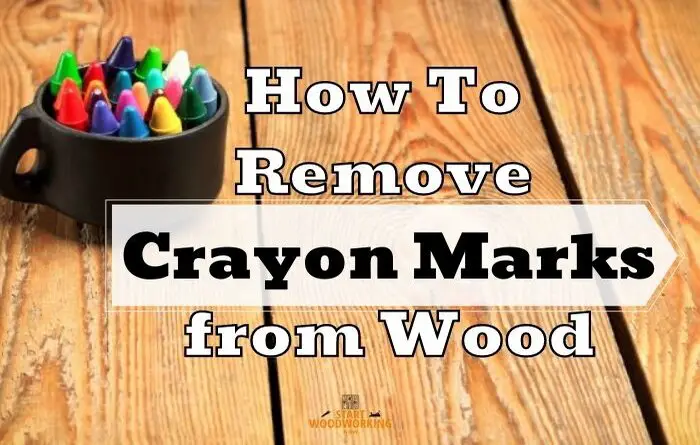
How to Remove Crayon from Wood: Wax Removal and Pigment Treatment Protocol by Surface Type
Crayon consists of two chemically distinct components that require two separate removal steps in sequence. Paraffin wax — the carrier that makes crayon marks visible on wood — is non-polar and dissolves only in non-polar solvents: mineral spirits, turpentine, or naphtha. The pigment component — mineral or organic colorant bonded to the wood surface after the wax is removed — is polar and responds to isopropyl alcohol at 70–90%. Applying vinegar, mayonnaise, or dish soap to crayon on wood does not dissolve paraffin wax because these are polar or water-based agents; they create no chemical interaction with a non-polar wax. The Magic Eraser method causes abrasive damage to polyurethane and lacquer finishes by micro-abrading the surface, creating a localised high-gloss patch more visually obvious than the original crayon mark. The correct protocol is: cryo-scraping for bulk removal → mineral spirits to dissolve wax → isopropyl alcohol for pigment residual. On sealed finishes, the wax rarely penetrates below the finish film; on bare wood, wax and pigment both penetrate the open grain and the mineral spirits contact time must be extended accordingly.
This guide covers the chemistry of crayon’s two components, the identification of surface type, the complete two-step removal protocol, and the specific constraints per finish type.
→ Related: How to Remove Candle Wax from Wood (same paraffin wax chemistry, no pigment component)
→ Hub: How to Remove Stains from Wood — Complete Guide
How Do You Remove Crayon from Wood?
What Makes Crayon Removal Different from Candle Wax Removal?
Candle wax and crayon wax both contain paraffin — a non-polar hydrocarbon wax that dissolves in mineral spirits and turpentine. This makes their wax removal protocols identical. The critical difference is that crayon also contains a pigment binder: mineral pigments (titanium dioxide, iron oxide, ultramarine, carbon black) or organic dyes in modern water-based crayons, pressed into the wax at manufacture.
When a child draws on wood, the applied pressure partially melts the wax and embeds both the wax and the pigment into the surface.
After mineral spirits dissolves and removes the wax component, the pigment remains on the wood surface or in the grain as a coloured residue — visually identical to an ink or dye stain.
This residual does not respond to further mineral spirits application because it is no longer bound in wax; it is a pigment particle or dye molecule in direct contact with the wood fibre or finish surface. Isopropyl alcohol at 70–90% addresses this residual pigment in the secondary step.
Why Is the Two-Step Sequence Mandatory?
What Are the Key Specifications for Removing Crayon from Wood?
| Method | Attribute | Value |
|---|---|---|
| Cryo-scraping (bulk removal) | Method | Sealed ice bag on crayon mark 2–3 minutes until brittle → plastic scraper at 10–20 degrees. Cold makes wax brittle and reduces adhesion. Reduces mineral spirits contact time needed. |
| Heat pre-treatment (hair dryer) | Risk assessment | Melts wax and drives pigment deeper into grain and pores. Effective only on sealed finishes where wax has no access to bare wood. Not recommended on bare wood — wax penetration increases significantly with heat. |
| Mineral spirits | Contact time on sealed finish | 30–60 seconds per application — wax is on surface. Wipe while still wet. 2–3 applications for heavy marks. |
| Mineral spirits | Contact time on bare wood | 3–5 minutes under a slightly damp cloth to prevent evaporation. Re-apply if surface dries before wax is dissolved. 2–3 applications for crayon applied with heavy pressure. |
| Mineral spirits on wax finish | Finish interaction | Mineral spirits dissolves furniture paste wax (carnauba, beeswax) alongside crayon wax. Mandatory: re-apply paste wax after crayon treatment on wax-finished furniture. |
| Mineral spirits on shellac or lacquer | Finish safety | Safe on both at brief contact times (under 2 minutes). Wax is typically on the finish surface — short contact time sufficient and low risk to finish. |
| Isopropyl alcohol | Concentration | 70–90%. Isopropyl 99% evaporates too rapidly for effective pigment contact. Isopropyl 70% has adequate contact time with minimal water content risk. |
| Isopropyl alcohol | Application method | Blot from edge inward — not lateral wiping. Replace cloth segment as pigment transfers. 60–90 seconds contact per application. |
| Isopropyl on shellac | STRICT LIMIT | Maximum 20–30 seconds contact. Isopropyl dissolves shellac at longer contact times. Limit to single short blot only. |
| Washable crayon (water-based dye) | Step 2 substitute | Washable crayons use water-soluble dye binders rather than oil-based pigments. After wax removal with mineral spirits, warm water + 2 drops dish detergent resolves colour residual without isopropyl. |
| Vinegar on crayon wax | Effectiveness | Zero — acetic acid (polar) has no dissolution mechanism for paraffin wax (non-polar). Any apparent result is mechanical (friction) not chemical. |
| Mayonnaise on crayon | Effectiveness | The oil in mayonnaise is mildly non-polar and can partially soften surface wax on sealed finishes through mechanical lubrication — not wax dissolution. No effect on wax in bare wood pores. No effect on pigment residual at any stage. |
| Magic Eraser (melamine foam) | Risk on wood finishes | Micro-abrasive — removes crayon by abrasion, not chemistry. Creates localised high-gloss patch on polyurethane mat/satin finishes, darkens oil finishes, scratches lacquer. More visually damaging than the original crayon mark on any finish except high-gloss polyurethane. |
| Sanding after treatment | When needed | Bare wood only — 120 grit if pigment penetrated grain deeply. After 24 hours drying. Not needed on sealed finishes. |
How Do You Remove Crayon from Wood with a Sealed Finish (Polyurethane, Lacquer, Varnish)?
On sealed finishes, crayon wax bonds to the finish surface through adhesion rather than absorption. The wax does not penetrate below the finish film into the wood grain. This makes removal significantly easier than bare wood — the two-step protocol typically resolves the mark in under 10 minutes without sanding.
STEP 1 Cryo-scraping — remove bulk wax
Place a sealed plastic bag filled with ice or a cold gel pack over the crayon mark and hold for 2–3 minutes. The cold makes paraffin wax brittle, reducing its adhesion to the finish surface.
After chilling, use a plastic scraper or the edge of a credit card held at 10–20 degrees to the surface and shear the cold, brittle wax away. The plastic card must not dig into the finish — use the flat of the card edge, not the corner. After scraping, a thin wax film and the colour residual will remain.
STEP 2 Mineral spirits — dissolve wax film (30–60 seconds)
Apply mineral spirits to a clean white cotton cloth and wipe over the wax residual in the grain direction. On a sealed finish, the wax is on the surface — 30–60 seconds contact and a firm wipe removes it cleanly. Avoid circular wiping which can spread dissolved wax.
For heavy crayon marks with multiple colour layers, a second mineral spirits wipe after the first cloth is fully saturated with dissolved wax. The finish surface will feel clean and smooth after mineral spirits. A coloured stain will remain — this is the pigment, not the wax.
STEP 3 Isopropyl 70–90% — remove pigment residual
Apply isopropyl at 70–90% to a fresh white cloth section and blot the coloured residual from the edge inward. Do not wipe laterally — blotting prevents the mobilised pigment from spreading. After 60–90 seconds contact, lift the cloth straight up and inspect the colour transfer. Replace the cloth with a fresh section and repeat. Dark, saturated crayon colours (black, dark blue, deep red) typically require 2–3 isopropyl applications to fully lift. On polyurethane and varnish finishes, isopropyl at standard contact times is safe. On lacquer: safe at 60 seconds maximum per application. On shellac: maximum 20–30 seconds per blot — isopropyl dissolves shellac at longer contact.
STEP 4 Inspect and wipe clean
After the pigment is fully removed, wipe the treated area with a clean damp cloth and dry immediately. Inspect in raking light — any remaining wax appears as a slight sheen; any remaining pigment appears as colour. A single additional pass of mineral spirits (wax) or isopropyl (colour) addresses any residual. No sanding is required on sealed finishes.
Then run a clean white cloth dampened with isopropyl over the area and check for any colour transfer — this is residual pigment. If neither transfers any material, the treatment is complete. This two-test confirmation is useful for deep-coloured crayons (black, dark blue) where faint residual is difficult to see in normal lighting.
How Do You Remove Crayon from Bare or Unfinished Wood?
Bare wood is the most demanding crayon removal scenario. Under drawing pressure, paraffin wax penetrates open wood pores and the pigment partially bonds to the wood fibres directly. Both mineral spirits contact time and the number of isopropyl applications must be extended compared to sealed finishes.
STEP 1 Cryo-scraping — bulk removal from surface pores
Apply cold as in the sealed finish method — cold increases wax brittleness and reduces penetration depth. Scrape at 10–20 degrees with a plastic card. On bare wood, scraping at too steep an angle or with metal tools risks raising or tearing the wood grain — use plastic only and keep the angle flat.
STEP 2 Mineral spirits — extended contact for pore penetration
Apply mineral spirits to a cloth and place it over the wax-stained area. Cover with plastic film to prevent evaporation and allow 3–5 minutes contact time. The mineral spirits must remain wet on the surface long enough to penetrate the pores and dissolve the wax inside them. Wipe in the grain direction with firm pressure, replacing the cloth when saturated.
Re-apply mineral spirits and allow another 3–5 minutes if the first application does not fully remove the wax residue. Test for wax removal with the cloth confirmation test described above. Allow 10–15 minutes drying before applying isopropyl — residual mineral spirits on the surface interferes with isopropyl’s pigment lifting action.
STEP 3 Isopropyl 70–90% — pigment treatment in grain
Apply isopropyl to a clean cloth and blot the coloured area. Allow 60–90 seconds contact. For dark colours on bare oak, walnut, or other open-grained species, the pigment may have partially bonded to the tannin-rich fibres. 2–4 isopropyl applications are typical for full pigment removal on bare high-tannin species.
After each application, allow the alcohol to evaporate fully before re-applying — this gives the previous application’s dissolved pigment time to be fully wicked by the cloth rather than being re-deposited by subsequent wiping.
STEP 4 Sand 120 grit if pigment remains in grain — 24 hours drying
If after 3–4 isopropyl applications a faint colour residual remains in the wood grain on bare wood — particularly with dark crayons on light-coloured species — the pigment has bonded to the wood fibres beyond the depth that surface solvent treatment can reach.
Allow the wood to dry completely for 24 hours, then sand with 120 grit in the grain direction to remove the stained surface wood fibre layer. Progress to 180 grit for a finish-ready surface. Apply new finish as required.
📝 The clearest illustration of the heat-before-solvent problem I have encountered was a client’s unfinished pine toy chest where a child had used dark blue and black crayons on multiple panels. The parents had used a hair dryer on medium heat before contacting me — following the advice on a general cleaning site. The heat had driven the paraffin and pigment approximately 2–3 mm into the open pine grain. Mineral spirits treatment at 5 minutes contact under plastic film resolved most of the wax, but 4 isopropyl applications at 90 seconds each were insufficient to fully clear the black pigment. Ultimately, 120-grit sanding was required on the black panels — which the clients could have avoided entirely with the cryo-scraping approach.
How Does the Finish Type Affect Crayon Removal?
| Finish Type | Wax Step (Mineral Spirits) | Pigment Step (Isopropyl) | Key Constraint |
|---|---|---|---|
| Polyurethane (oil or water-based) | 30–60 sec contact, wipe in grain. 2–3 applications for heavy marks. Mineral spirits safe on all polyurethane at these contact times. | 70–90%, 60–90 sec per application, blot inward. 2–3 applications for dark pigments. Safe on polyurethane. | Magic Eraser damages mat and satin polyurethane — creates localised gloss patch. Do not use. Heat drives wax into any micro-scratches in the finish surface — cryo-scraping preferred. |
| Lacquer (nitrocellulose or CAB-acrylic) | Mineral spirits safe at brief contact (under 2 min). Wax on lacquer surface — short contact sufficient. | Isopropyl safe at maximum 60 sec per application on nitrocellulose lacquer. CAB-acrylic lacquer: isopropyl safe at 90 sec. | Do not use acetone for pigment on lacquer — dissolves finish immediately. Isopropyl only, strictly timed. |
| Shellac | Mineral spirits safe — does not affect shellac at brief contact times. | Isopropyl: MAXIMUM 20–30 seconds per application. Isopropyl dissolves shellac. Single short blot only per pass. Allow full drying before re-applying. | Highest-risk surface for pigment removal. If pigment does not respond to 20-second isopropyl blot, use very small amount of denatured alcohol (3–5 seconds only) which dissolves the shellac locally — then refinish the treated area. |
| Varnish (alkyd or oil) | Mineral spirits safe — varnish is highly resistant to mineral spirits. Wax sits on surface. 30–60 sec contact. | Isopropyl 70–90% safe. 2–3 applications for dark pigments. | Old varnish may show slight dulling from isopropyl at extended contact — limit to 90 sec per application and wipe clean immediately after. |
| Wax finish (paste wax, beeswax, carnauba) | Mineral spirits dissolves crayon wax AND the furniture wax finish simultaneously. Contact time: 30–60 sec. | Isopropyl 70% safe for pigment residual on bare wood beneath wax finish. | Mandatory: re-apply paste wax to the treated area after crayon removal. The furniture wax finish has been stripped by mineral spirits and the wood is now unprotected. |
| Oil finish (Danish oil, linseed, tung) | Mineral spirits dissolves crayon wax — safe on oil finish at brief contact. Re-oil treated area after. | Isopropyl 70–90% safe on most oil finishes. Wipe quickly and re-oil. | Mineral spirits depletes oil finish layer in treated area — re-apply matching oil after complete drying. Colour match important on tinted oil finishes. |
| Bare / unfinished wood | Mineral spirits 3–5 min under plastic film. 2–3 applications. 10–15 min drying before Step 2. | Isopropyl 70–90%, 60–90 sec × 2–4 applications. Allow full evaporation between each. | Most demanding scenario. Dark crayon on light bare wood (pine, maple, ash) may require sanding after isopropyl treatment if pigment bonded to fibres. 120 grit → 180 grit after 24h drying. |
After cooling, the wax in the deep pores is more difficult to dissolve with mineral spirits because the solvent must penetrate further into the pore before the wax dissolves. On sealed finishes where the wax is on the surface and cannot penetrate, heat is less risky — but cryo-scraping is faster, safer, and produces better results on all finish types.
📝 The most instructive shellac-finish crayon scenario in my restoration work was a 1920s oak side table with an original shellac finish where a grandchild had drawn with red crayon on the tabletop. Mineral spirits at 45-second contact removed the wax cleanly without affecting the shellac. The red pigment residual required three isopropyl applications — strictly limited to 20 seconds of contact each time, with full evaporation between applications. The third application fully cleared the red pigment with no visible shellac damage. The 20-second limit per application is not conservative — at 45 seconds isopropyl begins to visibly soften and cloud the shellac surface.
Frequently Asked Questions About Removing Crayon from Wood
Does vinegar remove crayon from wood?
Vinegar has no chemical mechanism for removing paraffin wax from wood. Paraffin is a non-polar hydrocarbon wax; acetic acid in vinegar is a polar molecule. Non-polar and polar substances do not interact chemically — the “like dissolves like” principle means that only non-polar solvents (mineral spirits, turpentine, naphtha) can dissolve paraffin wax.
Any apparent result from vinegar on crayon marks is from the mechanical scrubbing action, not chemical dissolution. Mineral spirits resolves in seconds what vinegar cannot accomplish with minutes of scrubbing.
Can you use a Magic Eraser to remove crayon from wood?
Magic Eraser removes crayon by micro-abrasion — it is a melamine foam with an extremely fine abrasive surface. On high-gloss polyurethane, it may remove the crayon without visible damage to the finish. On mat, satin, or eggshell polyurethane finishes, lacquer, or shellac, the micro-abrasion removes the surface texture of the finish and creates a localised high-gloss patch that is more visually obvious than the original crayon mark and cannot be reversed without refinishing.
For any wood surface with a mat or satin finish, Magic Eraser causes irreversible finish damage. Mineral spirits and isopropyl alcohol are non-abrasive and produce better results without finish damage on all surface types.
Why does mineral spirits need to be used before isopropyl alcohol?
Crayon pigment is suspended in paraffin wax. While the wax matrix is present, isopropyl alcohol cannot reach the pigment directly — the non-polar wax repels the polar alcohol. Removing the wax first with mineral spirits exposes the free pigment on the wood surface or grain, at which point isopropyl can dissolve the pigment binders and lift the colour.
Applying isopropyl before mineral spirits mobilises some surface pigment but leaves the wax and the pigment within it intact, and can smear the mobilised pigment into a larger area as the alcohol evaporates rapidly. The two-step sequence — wax first, pigment second — is mandatory for complete removal.
What is the difference between regular crayon and washable crayon removal from wood?
Traditional wax crayons use oil-based mineral pigments suspended in paraffin wax. After wax removal with mineral spirits, the pigment residual requires isopropyl alcohol. Washable crayons use water-soluble dye binders designed to release easily from non-porous surfaces. After wax removal with mineral spirits, the colour residual from washable crayons typically dissolves in warm water with 2–3 drops of dish detergent — isopropyl is not required. If the washable crayon colour does not respond to warm water, a single application of isopropyl 70% will address any remaining dye residual.
Summary: Key Values for Removing Crayon from Wood
Crayon consists of paraffin wax (non-polar — dissolves in mineral spirits, turpentine, or naphtha) and pigment (polar — addressed with isopropyl 70–90%). The two-step sequence is mandatory: Step 1 mineral spirits removes the wax; Step 2 isopropyl removes the pigment residual exposed after wax removal. Reversing the sequence smears mobilised pigment.
On sealed finishes: mineral spirits 30–60 seconds + isopropyl 60–90 seconds per application, no sanding.
On bare wood: mineral spirits 3–5 minutes under plastic film + isopropyl 60–90 seconds × 2–4 applications; sanding 120–180 grit if pigment bonded to fibres. Cryo-scraping (cold ice bag → plastic scraper) removes bulk wax before solvent treatment on all surface types.
Heat before solvent treatment drives wax deeper into bare wood pores and is not recommended. Magic Eraser micro-abrades mat and satin polyurethane finishes, creating visible damage; do not use. Vinegar has no chemical mechanism for paraffin wax dissolution.
→ Related: How to Remove Candle Wax from Wood→ Hub: How to Remove Stains from Wood — Complete Guide